
Fields in Eaton County Property Tax Records
Each Eaton County property tax record blends assessment data with billing and collection data. Match the parcel, the jurisdiction, and the year in one view. Nearby addresses and similarly named owners can fall under different local units, so a loose match can pull the wrong tax bill.
| Field | What It Shows | Where |
|---|---|---|
| Assessed value | Annual assessment figure | Local assessor and BS&A |
| Taxable value | Value used with millage to calculate tax | Assessment roll and BS&A |
| PRE and other flags | Recorded exemption or relief status | Local assessor |
| Bill and status | Year, amount, payment, or delinquency | Treasurer and BS&A |
| Tax and school districts | Units whose levies apply | Parcel record and tax roll |
Michigan's state equalized value follows the statutory 50 percent concept, while taxable value obeys its own cap rules. The two figures answer different questions. Neither one is a sale price, and neither replaces a private appraisal of what the parcel would bring on the open market.
Start Eaton County Tax Research in BS&A
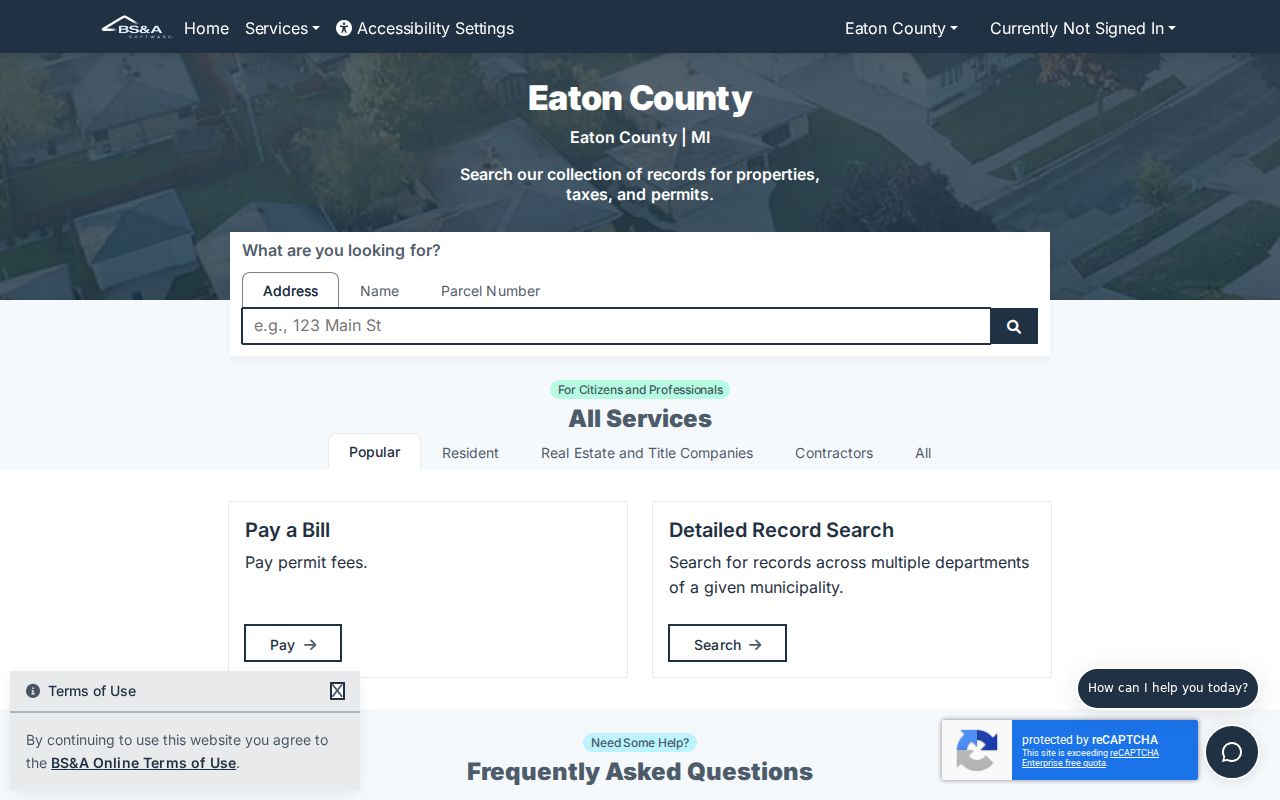
Eaton County BS&A Online splits its records into Assessing Search, Tax Search, and Delinquent Tax Search. It also offers a Detailed Record Search. Address, Name, and Parcel Number all work as entry points. Use the assessment module for values and roll fields. Turn to the tax module for bills and payment status.
| Search input | Best use | Check before relying |
|---|---|---|
| Address | Known property | Street, unit, postal-city variation |
| Name | Parcels associated with one roll owner | Trust, entity, and co-owner spelling |
| Parcel Number | Exact tax account | Leading zeroes and split extension |
| Module | Assessment, tax, or delinquency | Each module answers a different question |
The captured hub displays the available service routes.
The Eaton County December 31 Snapshot
Michigan assesses each property as it stood on December 31 of the prior year. The roll then works through annual assessment and equalization steps. That timing matters after a sale. A newly recorded deed may not change at the same moment as the owner or value shown in the tax system. Eaton's parcel layer refreshes tax and owner attributes daily. The geometry updates twice a year. Those are separate cycles. A fresh attribute date does not turn the assessment into a current market appraisal. After a recent sale, the recorded deed remains the stronger source. It confirms who holds title.
Look Up an Eaton County Tax Bill
Open BS&A with the parcel number in hand. Read the year and the jurisdiction, and separate current charges from delinquent ones. The Treasurer keeps the tax rolls and certifications, collects delinquent taxes, and serves as the foreclosing governmental unit for Eaton County.
- Search the address or full APN in BS&A and open the correct tax module.
- Confirm tax year, local unit, school district, bill amount, and displayed status.
- Compare assessed value, taxable value, and any PRE or relief flag on the roll.
- If delinquent, follow the Treasurer's official instructions before using a payment form.
- Save a dated receipt or ask the Treasurer for certification when proof of status matters.
- Assessed value
- The assessor's annual value measure used in the Michigan assessment system.
- Taxable value
- The capped value to which millage is applied.
- Millage
- Tax charged per thousand dollars of taxable value.
- Principal Residence Exemption
- A qualifying residence flag that can exempt up to 18 mills of school operating tax.
Pay Delinquent Eaton County Property Tax Carefully
The Treasurer's instructions send users to BS&A first. Users find the delinquent amount and parcel number there before choosing a payment route. City of Lansing property is handled differently from other Eaton County parcels. Delinquency starts in March after the tax year ends. Penalty and interest then accrue under the county's published process. The official GovPros Eaton payment page asks for the parcel, tax year, and amount. It also requests payment method, service fee, and billing details.
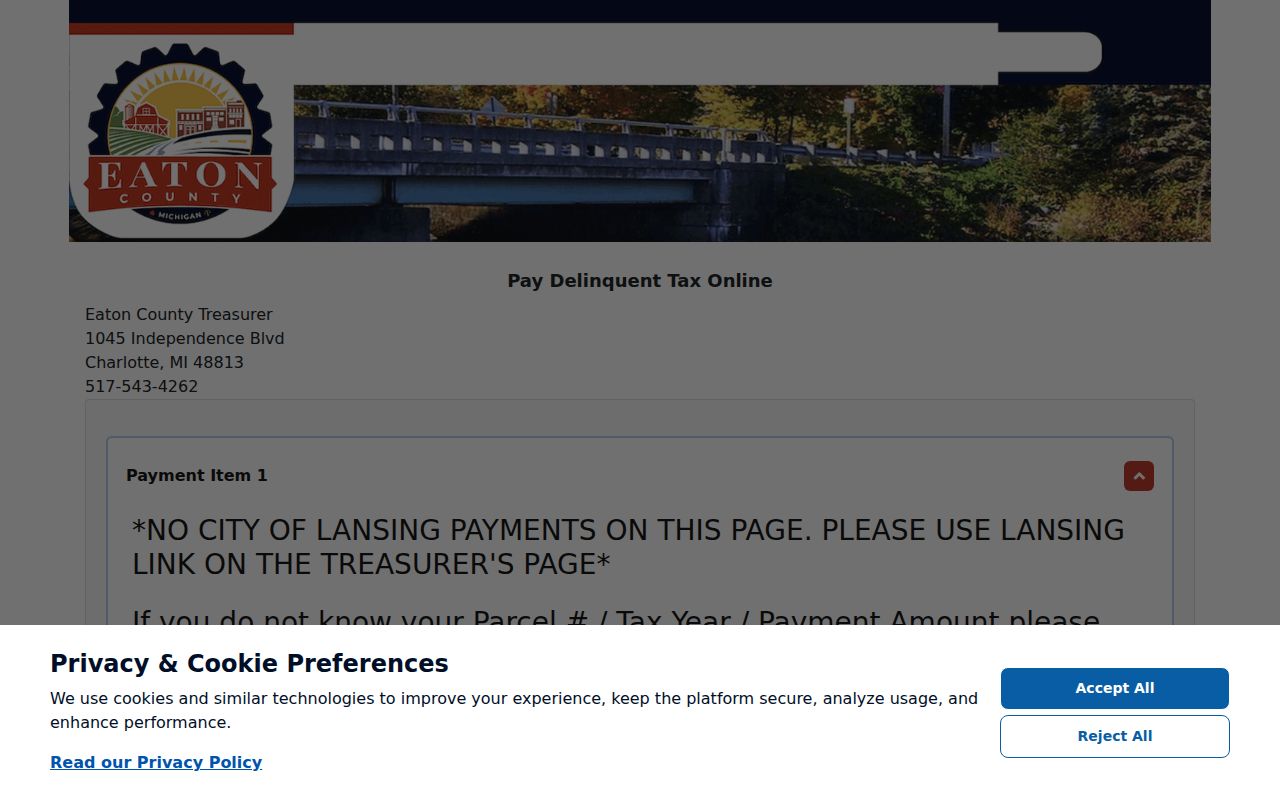
Treat a delinquent balance as time-sensitive. The balance alone proves neither foreclosure nor a change in title. Pull current foreclosure lists and deadlines straight from the Treasurer.
Eaton's Historical Tax and Equalization Books
Eaton County archives summer and winter tax-rate material back through its listed 2015 records. Equalization books go back to at least 2013. For deeper history, the Archives of Michigan guide points to Eaton tax account books from 1839 through 1888. It also lists assessment rolls from 1844 through 1955. Old books can explain a past assessment, a district line, or a family's tax burden in a given year. They cannot state a present balance. Pair the relevant year's roll with its rate. Save the source page. Then check the current Treasurer record for today's status. Archive staff or a focused Michigan FOIA request can help when a posted run falls short.
Review an Eaton County Property Tax Assessment
Assessment review starts with the local city or township assessor, not the Register of Deeds. The current Eaton assessor roster maps each municipality to its assessor. Ask that office for the current property tax notice. Ask for the classification, the calculation, the relevant forms, and the Board of Review calendar. Confirm the exact countywide appeal deadline with the local unit before filing. Strong evidence for an Eaton County property tax review includes the assessment notice, the parcel card, accurate building facts, and photographs. Add a survey or legal description. Include comparable sales matching the same valuation date and property type. County Equalization studies sales and appraisals across 21 local units. That work supports the system. It does not replace the local first step.
Confirm the appeal window. Eaton County property tax records follow local review calendars. A property tax appeal must use the assessor's current deadline and required forms.
Eaton County Tax Offices and Offline Access
The Eaton County Treasurer sits at 1045 Independence Boulevard in Charlotte and answers at 517-543-4262. Public hours run Monday through Thursday, 8:30 a.m. to 4:30 p.m. The office closes from noon to 1 p.m. Friday is closed. Contact the Treasurer for delinquent status, foreclosure-stage records, tax-roll certification, and payment routing. The official Eaton County Treasurer page posts the county's search-first instructions and office contact details.
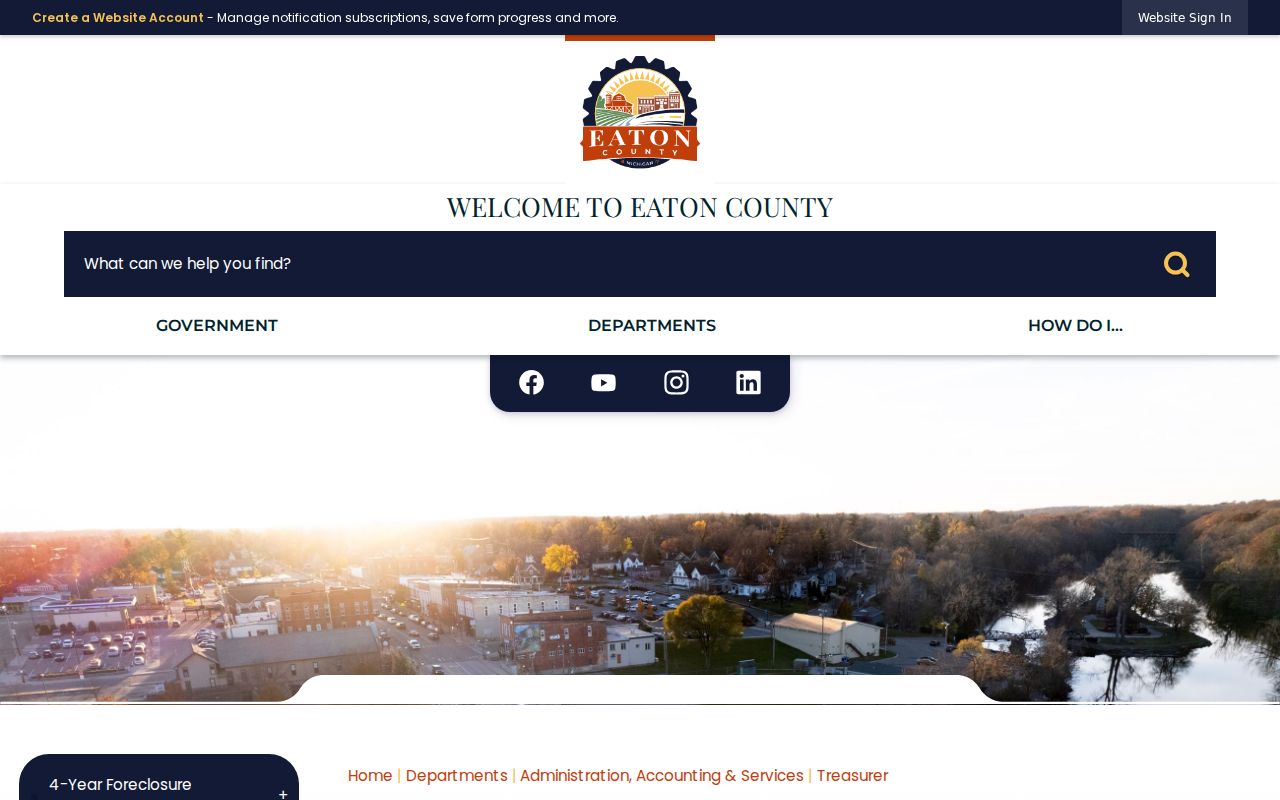
The Treasurer's own page directs parcel research through BS&A before payment or any delinquency inquiry. For valuation, exemption, or classification questions, go to the local assessor. The county's current roster names each local assessor. Equalization and Property Description sits in Room 150 of the same county complex. The office helps with legal descriptions, certain splits and combinations, and annual equalization records. A Michigan FOIA request can obtain an existing non-exempt record that is not online. The law does not require an office to create a new analysis.
Read Eaton County Tax District Codes
District codes tell you where every tax dollar goes. Eaton County's official parcel layer publishes the civil tax and school district fields alongside property class, acreage, assessed value, and taxable value. A mailing address can mislead you. Postal cities often straddle a municipal line, so confirm the district on the parcel record rather than inferring it from the last line of an address.
Equalization takes the countywide view. Eaton County Equalization studies sales and appraisals for 21 local units and supports the annual countywide process, while each city or township assessor maintains its own roll. City codes come from the assessor list. They include 200 Charlotte, 300 Eaton Rapids, 400 Grand Ledge, 500 Lansing, 600 Olivet, and 700 Potterville. Township codes live in the county's separate table.
Summer and winter bills differ. The county guide places education and some county millage on the summer bill, with added voted millage in winter. Read the taxing-unit lines and year printed on the actual bill, because historical rate archives explain older levies but cannot establish the current one.
Principal Residence and Eaton Tax Relief Records
A Principal Residence Exemption can strip up to 18 mills of school operating tax from a qualifying principal residence. The PRE field is still just a tax-roll fact. It proves neither occupancy nor clear title. Filing status and the effective year both matter. A newly purchased property may not yet show the expected flag.
Other relief programs exist. Eaton County tax materials also reference veteran, disabled, and deferment programs, each with its own eligibility rules, forms, and deadlines. Ask the local assessor directly. The assessor can name the record documenting the claimed relief and the board or office that decides it. Don't infer eligibility from age, name, or ownership. A prior year's exemption proves nothing either.
Dissect any bill you plan to dispute. Separate the gross taxable value, applicable millage, exemptions, payment history, and delinquent balance line by line. That breakdown shows whether the dispute is really about valuation, classification, a missing exemption, payment posting, or collection, and each of those issues belongs to a different custodian with a different correction path.
Research Eaton Tax Foreclosure Without Guessing
Delinquent status starts a process. It does not mean the county has taken title. In Eaton County, the Treasurer acts as the foreclosing governmental unit. Its page explains that delinquent taxes begin in March after the tax year, with penalties and interest added from there. Always check redemption, foreclosure, and sale deadlines against the Treasurer's current calendar before drawing conclusions.
Eaton County publishes no online tax-sale list. Ask the Treasurer directly for the delinquent-parcel list, the foreclosure-stage list, the redemption or sale calendar, and the controlling publication. The office reports preventing more than 2,000 foreclosures since 2016. It lists a Charlotte prevention-resource number, 517-541-0269. That line offers help, not a property list.
For a parcel in distress, record the parcel number, site, district, delinquent years, balance as-of date, notice type, deadline, case number, recorded instrument, sale result, and any later redemption or deed. Search the Register for tax liens, notices, sheriff's deeds, and releases. Check the court portal for a related case.